TOP 10 OS FOR HACKING

Top 10 Operating Systems for Ethical Hacking and Penetration Testing
1. Kali Linux
The first name on our list is Kali Linux, which was first launched on 5th February 2006. It is funded and maintained by Offensive Security, a provider of world-class penetration testing and information security training services.
This OS is based on Debian and comes preinstalled with more than 600 pen-testing tools. Not only are these tools resourceful and versatile, but they are also updated regularly.
These tools are available for various platforms like VMware and ARM while the entire toolbox is available on GitHub.
2. Parrot Security OS
Parrot Security OS is a secure, free of charge GNU/Linux distro based on Debian, which has a focus on computer security. It is developed by the Frozenbox team and a combination of Kali Linux and Frozenbox.

This light-weight Debian testing Linux distro is specifically designed for computer forensics, cryptography, penetration testing, vulnerability assessment, and mitigation.
This OS is cloud-friendly and comes with the MATE desktop environment. This OS has a myriad of legally recognized tools that give users the ability to browse the web anonymously.
Do not confuse its light-weightedness as a weakness. It has a robust interface derived from Gnome 2. Further, it is quite customizable with ad-hoc themes, wallpapers and captivating icons.
3. Samurai Web Testing Framework
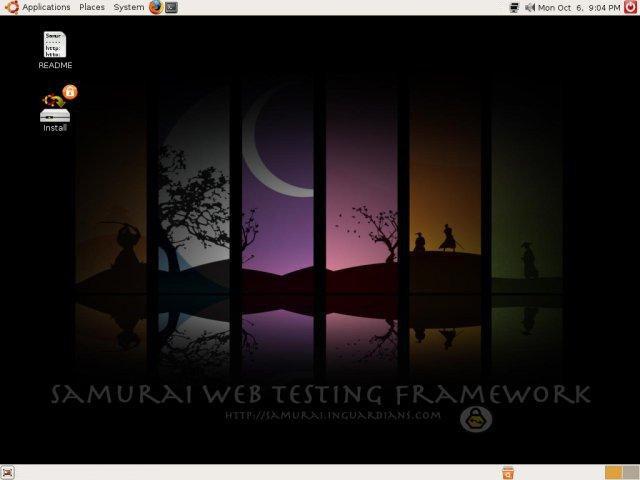
This web testing framework comes with WebApp Pentest tools like SQLMap, Burp Suite, etc., which makes it a professional web application penetration testing framework and useful for ethical hacking.
It was initially released in 2008 and is based on Ubuntu. It is like a virtual machine supported on VirtualBox and VMware, making it configured for functioning as a web pen-testing environment.
Most fascinating is that it contains the best of the open-source Web assessment and exploitation tools, like WebScarab and Ratproxy for mapping, Fierce Domain Scanner and Maltego for Reconnaissance, w3af and Burp for discovery, and BeEF and AJAXShell for exploitation.
4. DEFT Linux

DEFT stands for Digital Evidence & Forensics Toolkit. It is presently developed and maintained by hacker buono - Stefano Fratepietro, available free of charge. This open-source system is based on GNU Linux and can run as a virtual appliance on VMware or live.
DEFT is a Ubuntu customization with a collection of documents and computer forensics programs created by thousands of companies, teams and individuals. It also features a Ubuntu-based open-source suite, Digital Advanced Response Toolkit (DART).
It consists of more than 100 highly-rated forensics and hacking tools that can be used by individuals, IT auditors, investigators, military, and police.
5. NodeZero Linux
NodeZero Linux is based on the Linux kernel and is an open-source ethical hacking operating system. It is derived from Ubuntu and specifically developed for pen testing functions.
While using NodeZero, you will get instant access to over 300 pen-testing tools along with a basic set of services needed in such pen-testing operations. This distro can be run on 32-bit as well as 64-bit computing architectures and can be downloaded as a dual-arch live DVD ISO image.
You can also access features like safe mode booting, text mode or debug mode, system memory diagnostic tests, hard disk booting, install direct.
6. Linux Kodachi
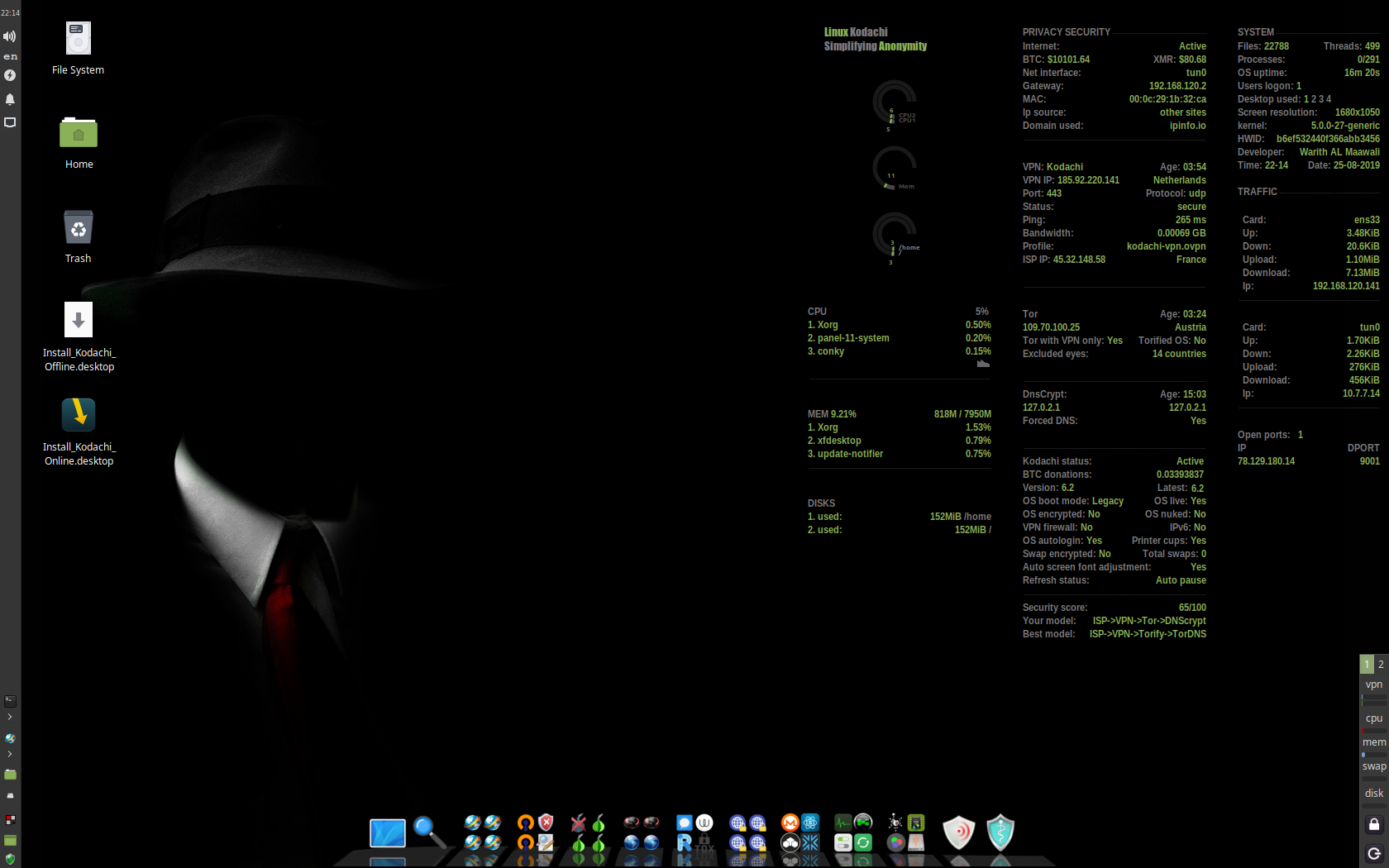
It is a Debian-based distribution that filters all network traffic through a VPN and the Tor network, obscuring the user’s network location, letting them use the internet anonymously.
Linux Kodachi can be run from a DVD, USB thumb drive or SD card. and attempts to clean up after itself, trying to remove the proof of its use from the system.
It also has cryptographic and privacy tools that encrypt your files, emails and instant messaging. This makes Kodachi secure and unique.
7. BlackArch Linux
This Arch Linux distro is especially for penetration testers and security professionals. It can be a great alternative to Backbox and Kali Linux in terms of the ease and variety of available tools.
In fact, the repository contains 2480 tools thoroughly tested before being added to the codebase, which can be installed individually or in groups.
It is compatible with existing Arch installs and can be installed on 32-bit and 64-bit machines including ARM-based development boards like Raspberry Pi, BeagleBone, etc.
8. Network Security Toolkit (NST)
NST was developed by Ronald W. Henderson and Paul Blankenbaker and initially released in 2003. This toolkit is a bootable ISO live DVD/USB Flash Drive.
The main intent of this Fedora-based toolkit is to provide a comprehensive set of open-source Network Security Tools to security professionals and network administrators.
While using NST, you have access to 125 open source security tools that carry out intrusion detection, network packet generation, wireless network monitoring, network traffic analysis, a virtual system service server, or network/host scanner.
9. BugTraq
BugTraq was developed by the BugTraq team and initially released in 2012. It is available in 11 languages and preconfigured with more than 500 ethical security hacking, malware testing and mobile testing tools. It also has other software developed by the Bugtraq-Community.
This GNU/Linux distro is focused on digital forensics, penetration testing, malware laboratories, and GSM forensics. Further, it is also used for Reverse Engineering and Malware Analysis Mission.
10. Cyborg Hawk Linux
This OS doesn’t just have a cool name but is also considered the most advanced, robust and well-handled Ubuntu-based pen-testing distro. It was created by Ztrela Knowledge Solutions Pvt Ltd.
You can access more than 300 tools for mobile security and malware analysis and 700 tools dedicated to penetration testing. The latest version of Cyborg Hawk Linux comes with its own repository.
In A Nutshell
Well, you cannot stop someone from hacking into a system with 100% surety. The best you can do is optimize and improve the security of the system using the best hacking and pen-testing operating systems. Happy ethical hacking!
Comments
Post a Comment